Xiphosura
Living fossil arthropods with a sword-like tail.

James C. Lamsdell · CC BY 4.0
Xiphosura is an order of arthropods related to arachnids, commonly known as horseshoe crabs. Currently, only four living species exist, all belonging to the family Limulidae.
- extant_species
- 4
- maximum_adult_length
- 60 cm (24 in)
- suborder
- Xiphosurida
- notable_feature
- sword-like telson
- classification_notes
- historically placed in Merostomata, now often considered a synonym of Xiphosura; some phylogenomic studies place Xiphosura within Arachnida
Lore & Background
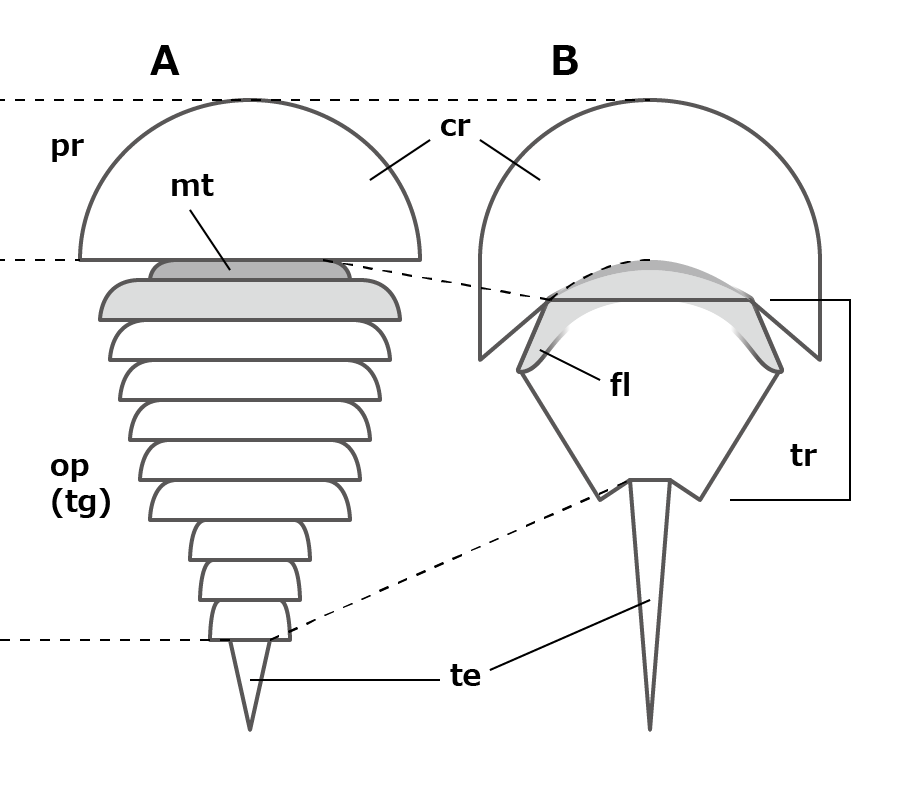
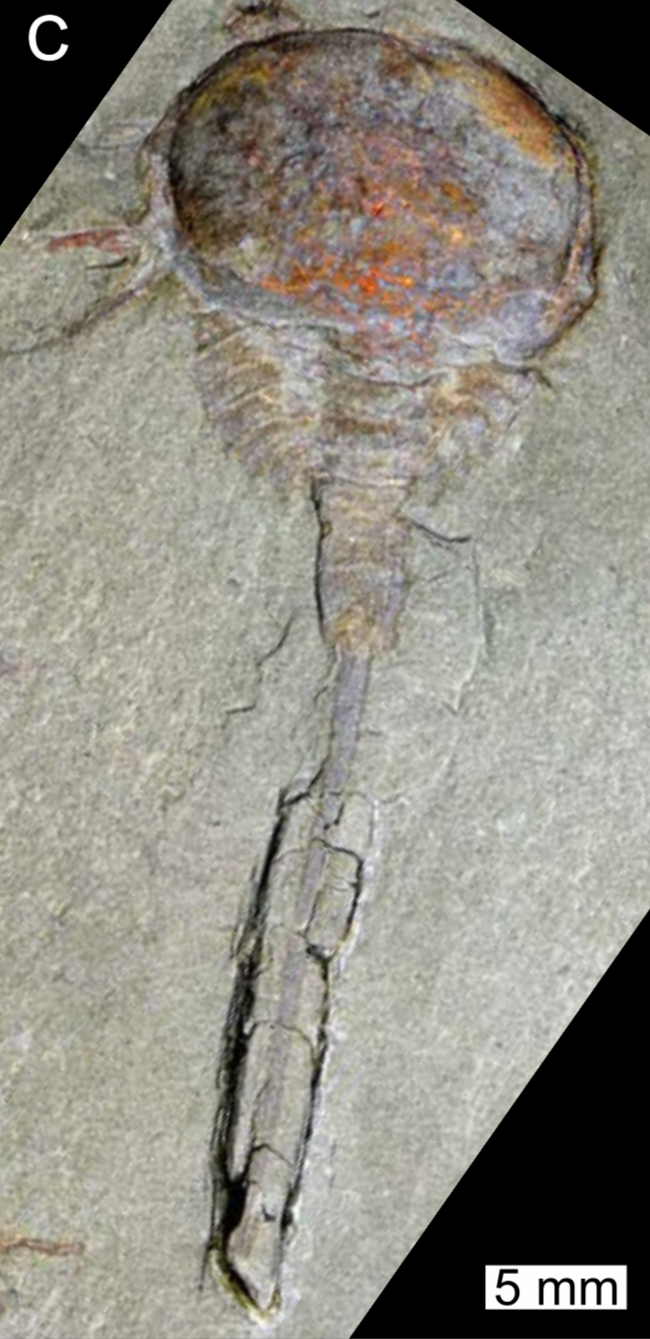
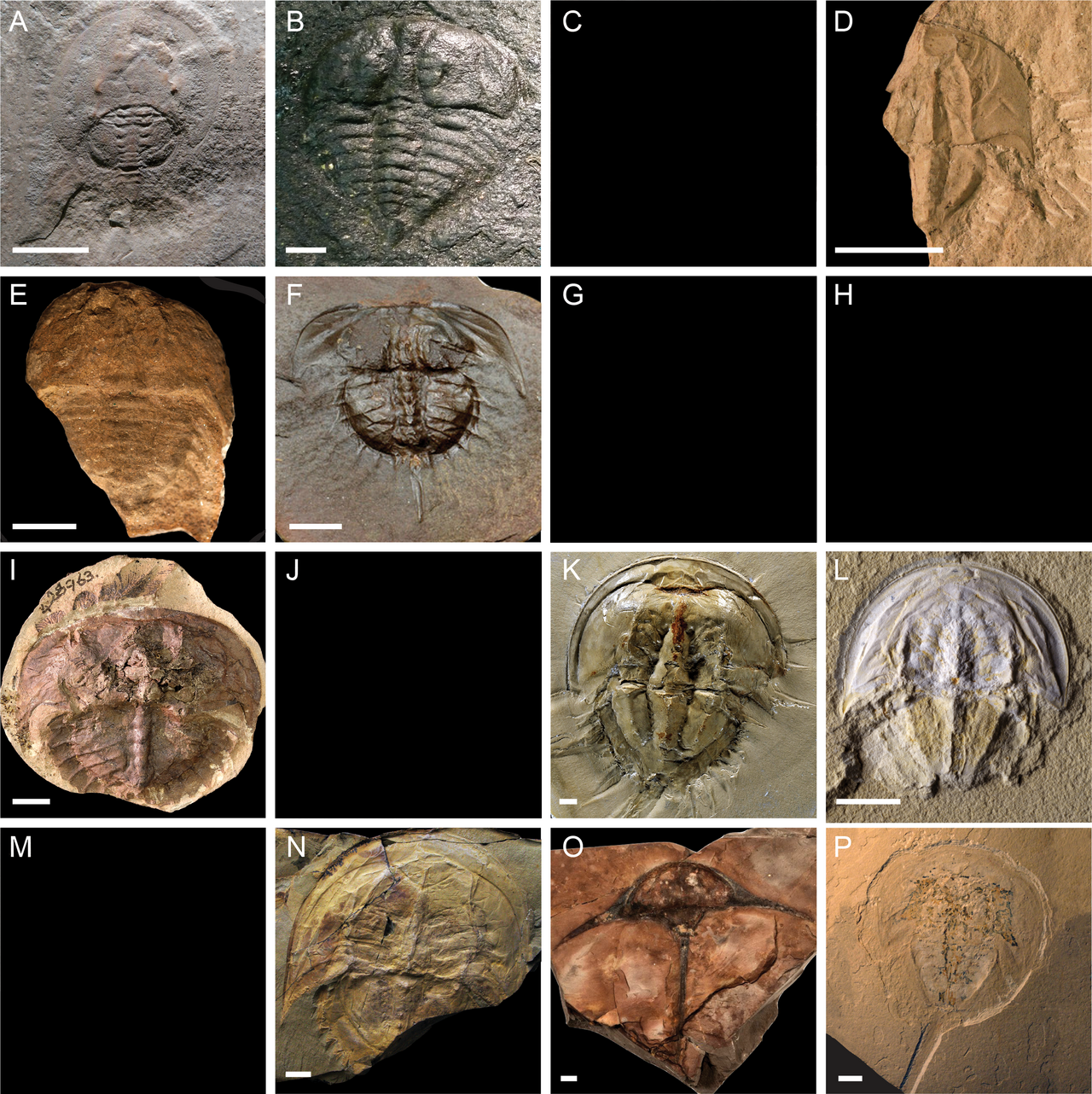
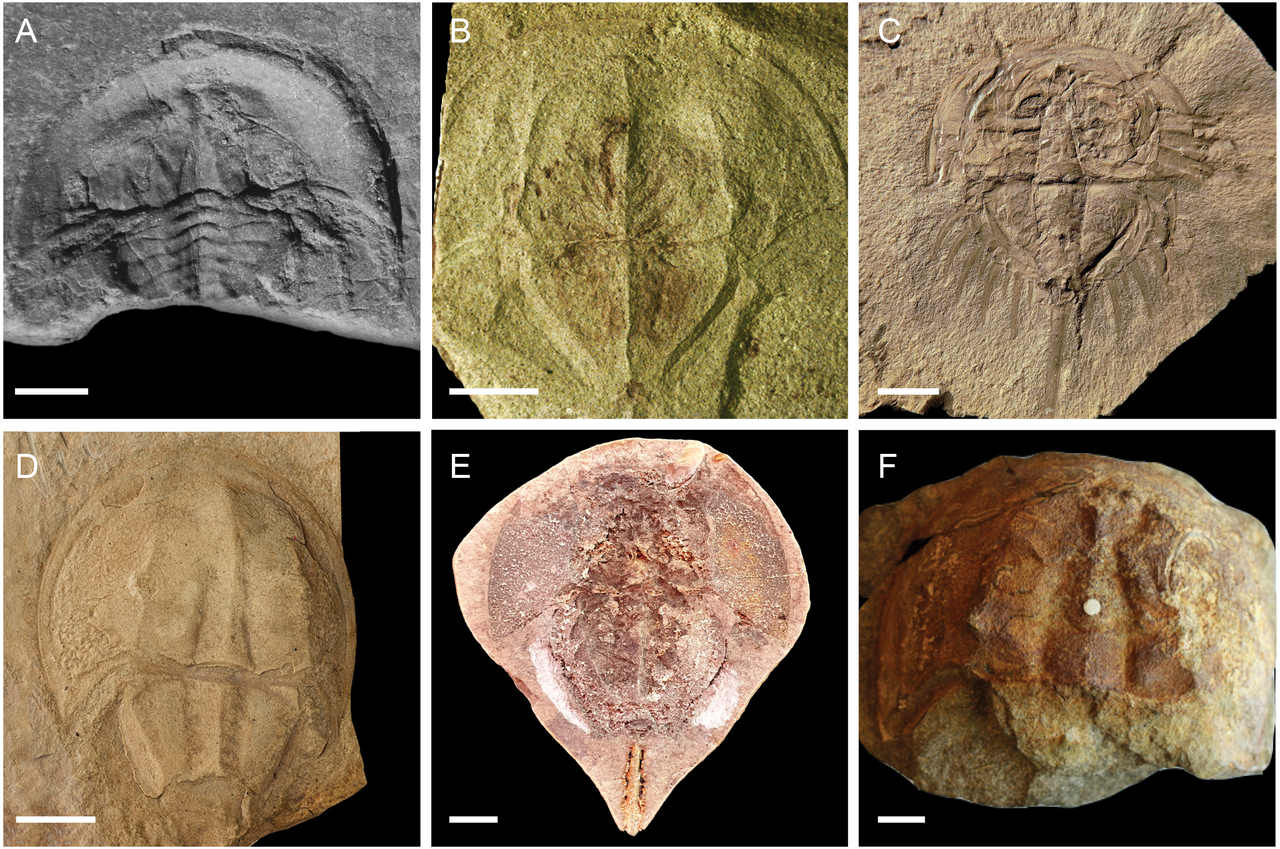
Xiphosurans have bodies divided into an anterior prosoma and a posterior opisthosoma. The prosoma is covered by a semicircular carapace and bears five pairs of walking legs and a pair of chelicerae. They have up to four eyes, including two compound eyes and one or two median ocelli. The opisthosoma terminates in a long, mobile caudal spine (telson) used to right the animal if overturned. Modern species reach up to 60 cm in length, but Paleozoic forms were often much smaller, some as small as 1 to 3 cm. Internally, xiphosurans have a sclerotised oesophagus, crop, gizzard, and true stomach with digestive enzymes. Their circulatory system includes a long tubular heart and blood containing haemocyanin, a blue copper-based pigment. The excretory system consists of two pairs of coxal glands. The brain is relatively large and surrounds the oesophagus. The eggs hatch into a 'trilobite larva' that is lecithotrophic and planktonic before settling to the bottom. Modern xiphosurans reach sexual maturity after 9 to 12 years.
Reader's Guide
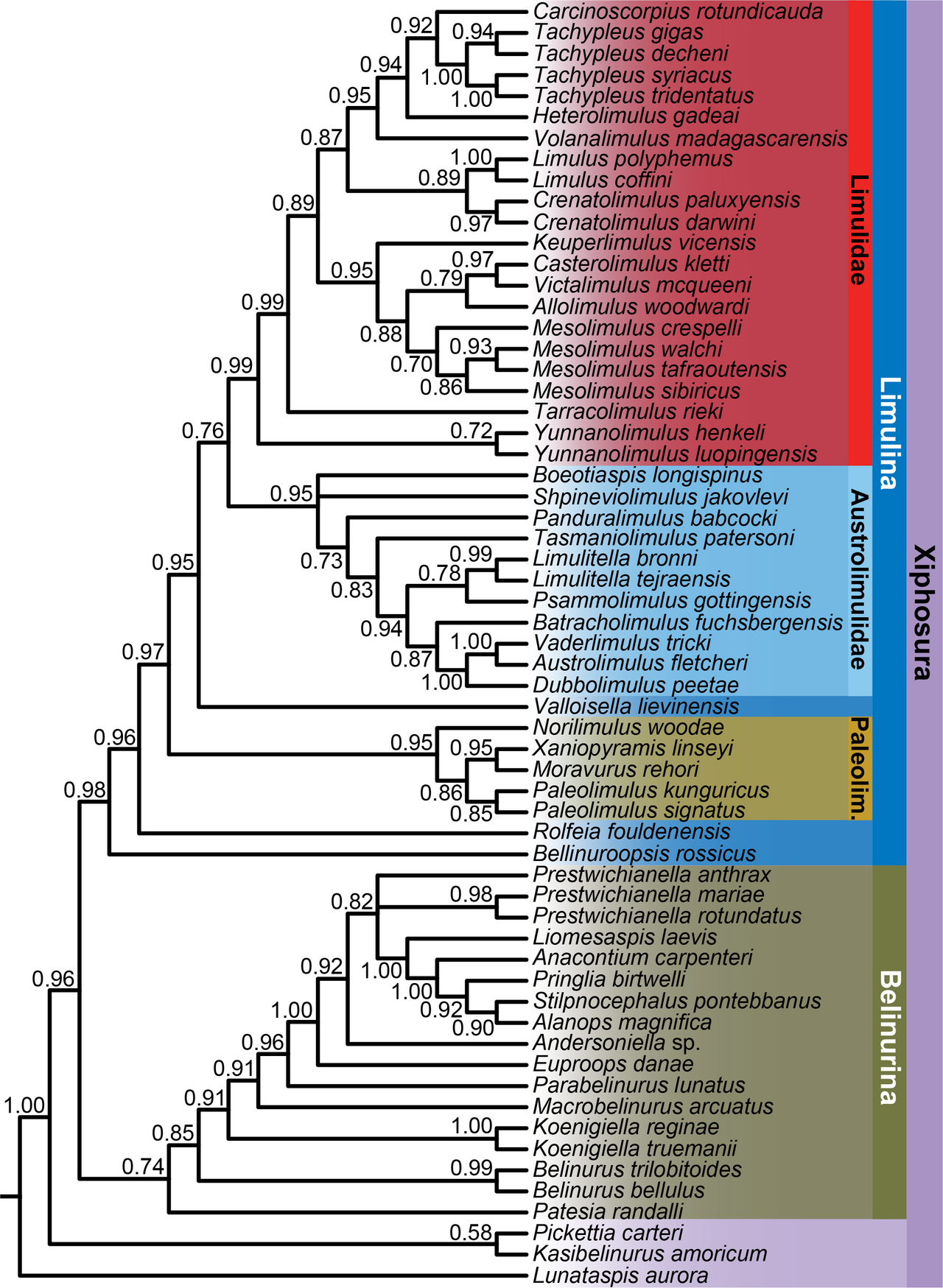
Xiphosura are significant as living fossils, having remained morphologically stable for hundreds of millions of years. Their modern representatives, horseshoe crabs, are the only surviving members of the order, with four extant species. The group's evolutionary history includes stem-genera such as Lunataspis from the late Ordovician and a major radiation of freshwater forms in the Carboniferous. Despite their long history, xiphosurans have never shown high species diversity, with fewer than 50 fossil species known from the Carboniferous, their most diverse period. Taxonomically, Xiphosura were historically placed in the class Merostomata, but this grouping is now considered paraphyletic. Some recent phylogenomic studies place Xiphosura within Arachnida, often as the sister group of Ricinulei. The order contains one suborder, Xiphosurida, and several stem-genera. Their blood contains haemocyanin and is used in biomedical applications (though this is not stated in the source). The group's persistence and unique anatomy make them important for understanding arthropod evolution and the concept of living fossils.
Did You Know?
- The name Xiphosura comes from Ancient Greek for 'sword' and 'tail', referring to its sword-like telson.
- Modern xiphosurans can reach up to 60 cm in adult length, but some Paleozoic species were as small as 1 to 3 cm.
- Xiphosurans have blood containing haemocyanin, a blue copper-based pigment.
Gallery
Frequently Asked Questions
Who is Xiphosura?
Xiphosura is an order of marine arthropods most people recognize as horseshoe crabs. They are closely related to arachnids and sit within the suborder Xiphosurida, with all four surviving species falling under the family Limulidae.
What are Xiphosura's powers or notable features?
Their most iconic trait is the long, sword-shaped telson trailing behind their body, which gives the group its name. Adults can grow up to roughly 60 cm (about 24 inches) in length, making them among the larger marine arthropods you'll encounter in shallow coastal waters.
Why is Xiphosura important in the marine invertebrate canon?
Fans and researchers alike value Xiphosura because its body plan has changed so little across hundreds of millions of years that it serves as a living link to the Ordovician seas. Some phylogenomic analyses even nest Xiphosura inside Arachnida, reshaping how we think about the broader arthropod family tree.
More in Marine Invertebrates 1-24
Elsewhere in the Marine Invertebrates universe
Spotted an error? Know more?
This is a living reference — every entry is fact-audited, and reader corrections feed straight into our audit queue. Suggest an edit · See this site's audit record