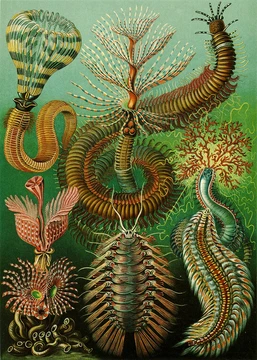
Sponge
Ancient filter-feeding animals that lack true tissues and organs.

Nhobgood ( talk ) Nick Hobgood · CC BY-SA 3.0
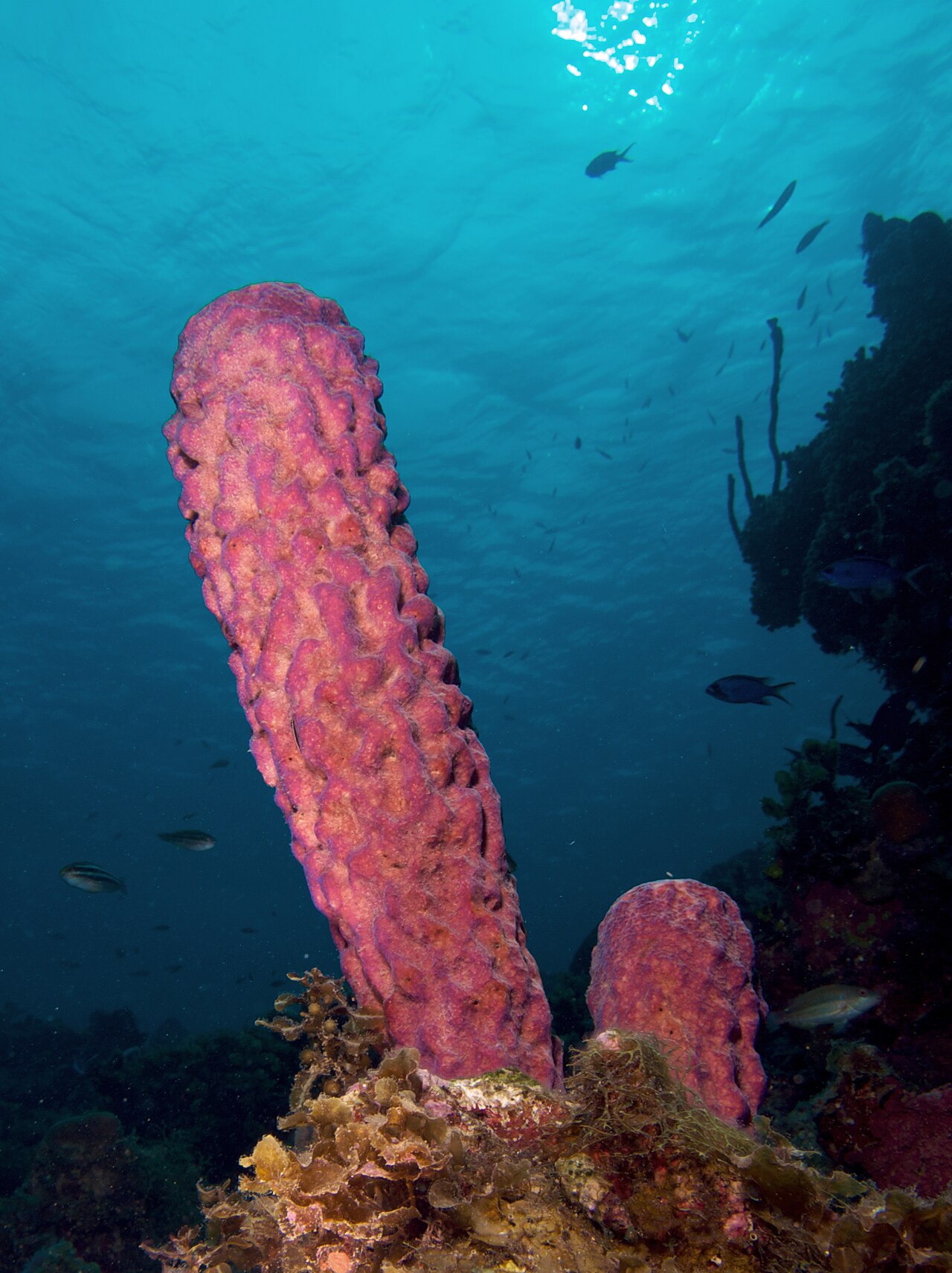
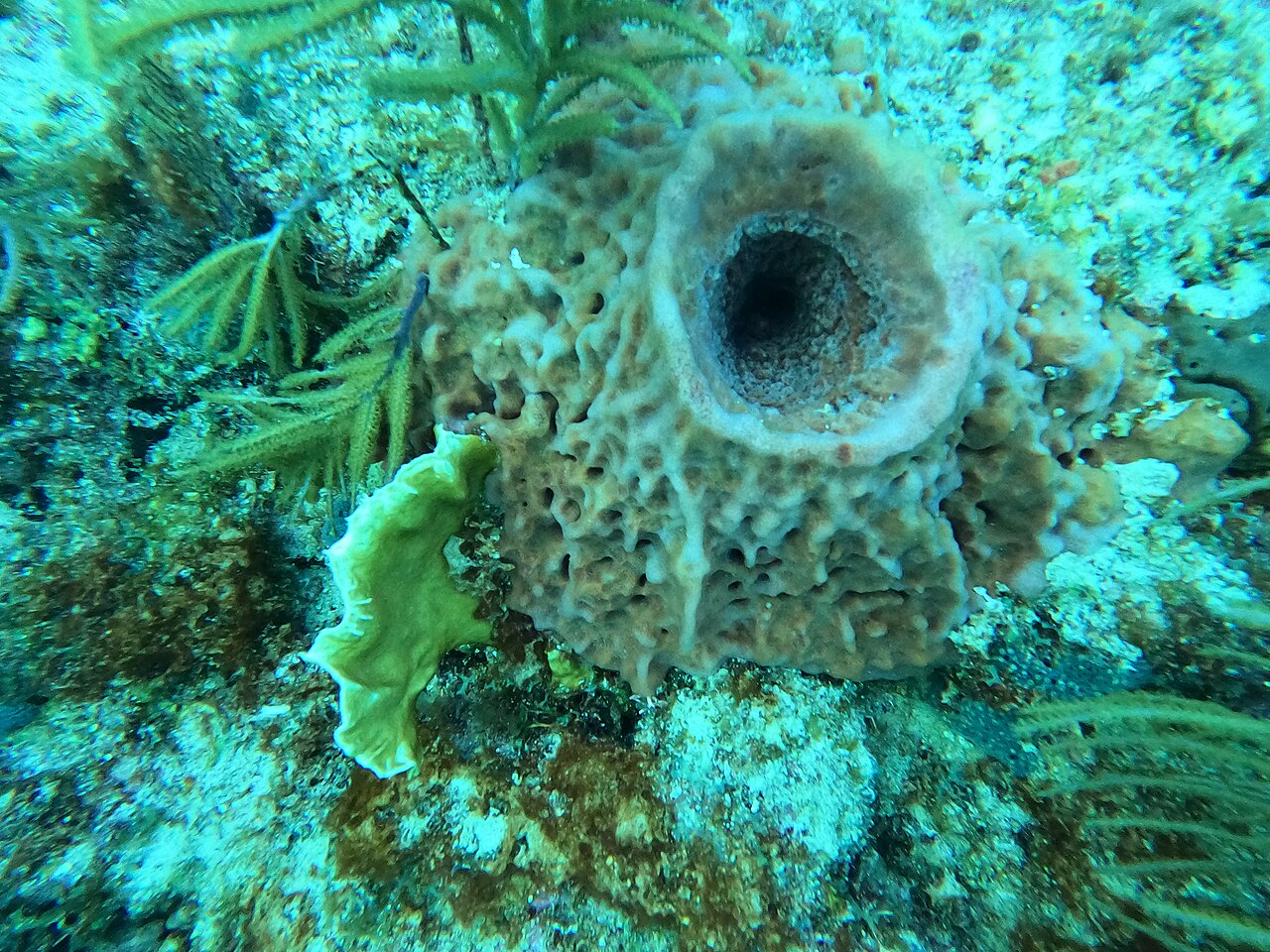
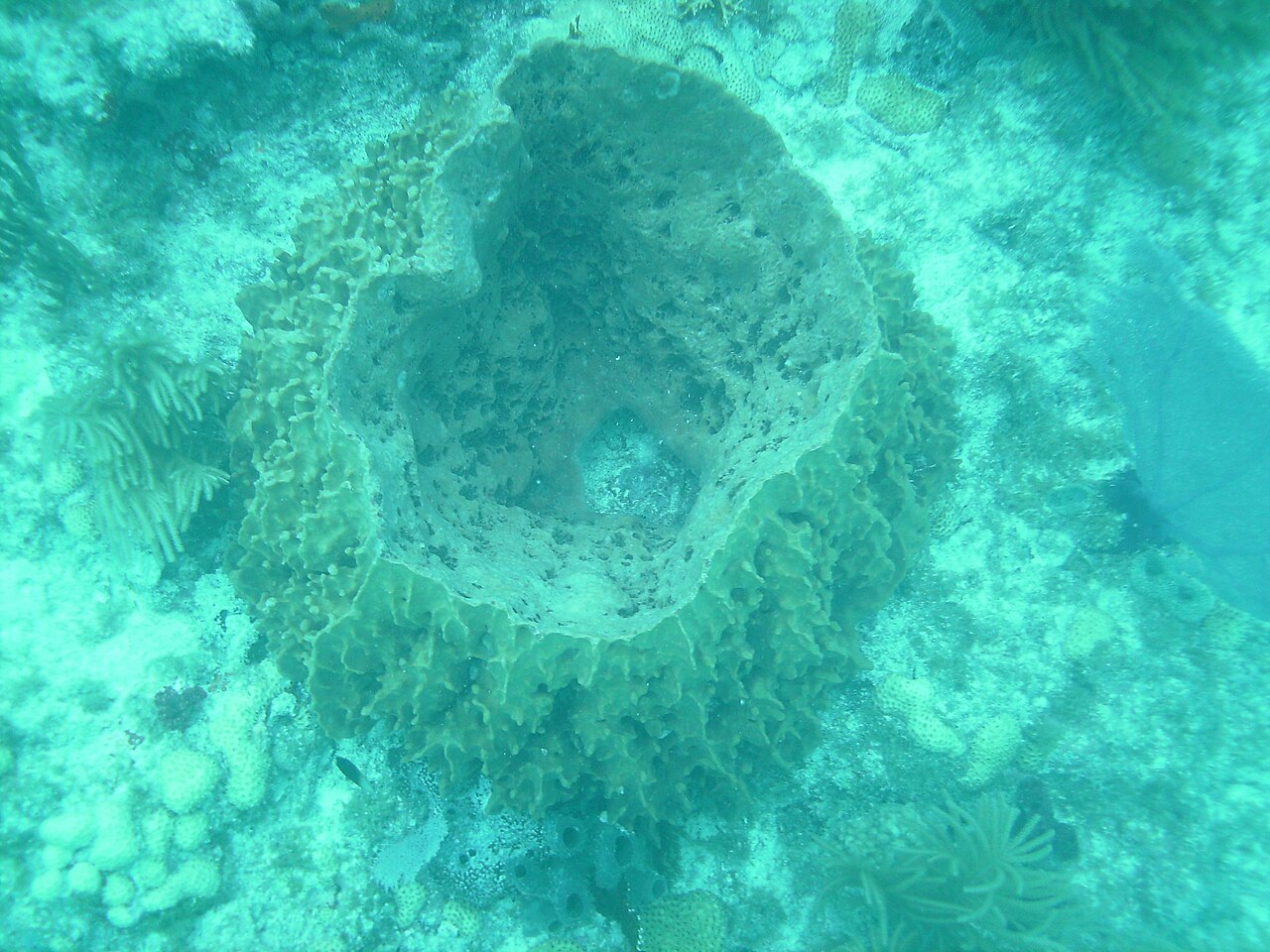
Sponges, or sea sponges, are primarily marine invertebrates of the animal phylum Porifera, meaning 'pore bearer'. They are filter feeders that are typically sessile, bound to the seabed, and are among the most ancient members of living seabed communities, with many species being important reef-builders. Some sponge species inhabit freshwater.
- phylum
- Porifera
- earliest_fossil_evidence
- Tonian period, around 800 Mya (Otavia)
- number_of_known_species
- approximately 5,000–10,000
- habitat
- marine (tidal zones to depths exceeding 8,800 m) and freshwater
- key_feature
- filter feeders with water flow systems driven by choanocyte cells
- sister_group_relationship
- may be sister group to all other animals, but evidence inconclusive
Lore & Background
Sponges are multicellular organisms consisting of a jelly-like mesohyl sandwiched between two thin layers of cells, with tube-like bodies full of pores and channels for water circulation. They have unspecialized cells that can transform into other types and migrate between layers. Most sponges rely on constant water flow through their bodies to obtain food and oxygen and remove waste, using flagellar movements of collar cells. They lack complex nervous, digestive, or circulatory systems.
Reader's Guide
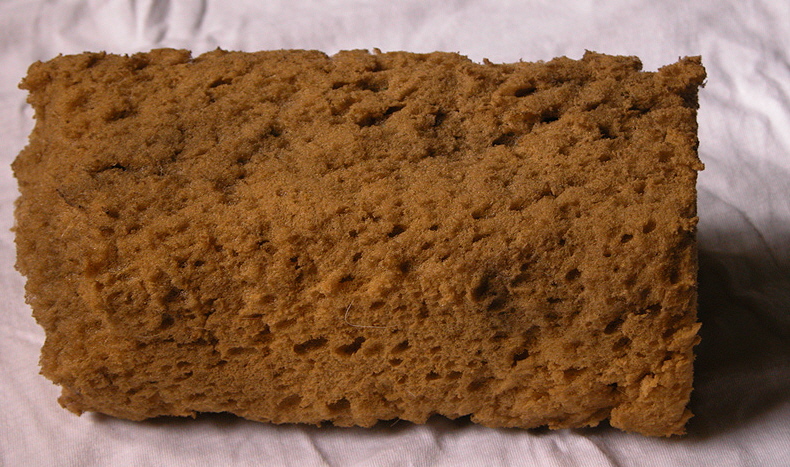
Sponges are significant as one of the most ancient members of the seabed community, with fossil evidence dating to around 800 million years ago. Their simple body plan—lacking true tissues and organs—makes them a key group for understanding early animal evolution, though their exact relationship to other animals remains debated. Over 90% of known sponge species are demosponges, which inhabit the widest range of habitats, including all freshwater ones. Historically, the skeletons of sea sponges were used as cleaning tools, though this practice is no longer common. Today, sponges and their microscopic endosymbionts are researched as possible sources of medicines. Dolphins have been observed using sponges as tools while foraging.
Did You Know?
- Sponges are filter feeders that are typically sessile, bound to the seabed.
- Fossil evidence of primitive sponges such as Otavia dates to around 800 Mya.
- Some sponge species are carnivorous, using fishhook-like spicules to snag small crustaceans.
- Dolphins have been observed using sponges as tools while foraging.
Gallery

Frequently Asked Questions
What exactly is a sponge?
Sponges are simple, mostly stationary animals in the phylum Porifera, a name that essentially means 'pore bearer.' They lack true tissues and organs, giving them one of the most basic body plans found in the animal kingdom.
How do sponges actually eat?
They pump a continuous flow of water through their porous bodies using specialized cells called choanocytes, which trap microscopic particles and dissolved nutrients along the way. This filter-feeding strategy means they never have to chase down a meal.
How long have sponges been around?
Fossil traces of sponge-like organisms reach back roughly 800 million years to the Tonian period, making them among the oldest recognizable animals on Earth. That places them well before the Cambrian explosion and far older than any vertebrate lineage.
Where can you find sponges?
Most species anchor themselves to the seafloor anywhere from shallow tidal pools down past 8,800 meters in the deep ocean, though a handful of species thrive in freshwater habitats. They are especially important as reef-builders in many marine ecosystems.
How do sponges relate to the rest of the animal tree?
Current evidence suggests sponges may occupy the sister-group position to every other animal phylum, meaning they diverged before the split that gave rise to all remaining lineages. However, the phylogenetic data remains debated, so their exact placement at the base of the animal tree is still under active discussion.
More in Marine Invertebrates 1-24
Elsewhere in the Marine Invertebrates universe
Spotted an error? Know more?
This is a living reference — every entry is fact-audited, and reader corrections feed straight into our audit queue. Suggest an edit · See this site's audit record