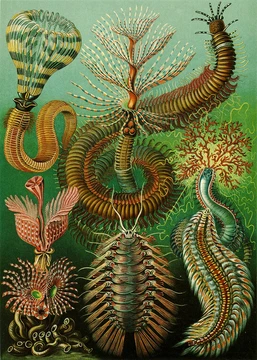
Arenicola
Genus of lugworms known for burrows and mass breeding.

Rosser1954 · CC BY-SA 4.0
Arenicola, also known as sandworms, is a genus of capitellid annelid worms comprising the lugworms and black lugs. These burrowing marine worms are notable for their U-shaped burrows in sand and their role in coastal ecosystems. Species such as Arenicola cristata dominate warm-water shores of North America, while Arenicola marina is mostly found in Europe, up to Norway, and Arenicola loveni is restricted to Southern Africa.
- field
- Marine biology, annelid taxonomy
- known_for
- U-shaped burrows, mass breeding events, use as bait
- species_count
- 8
Lore & Background
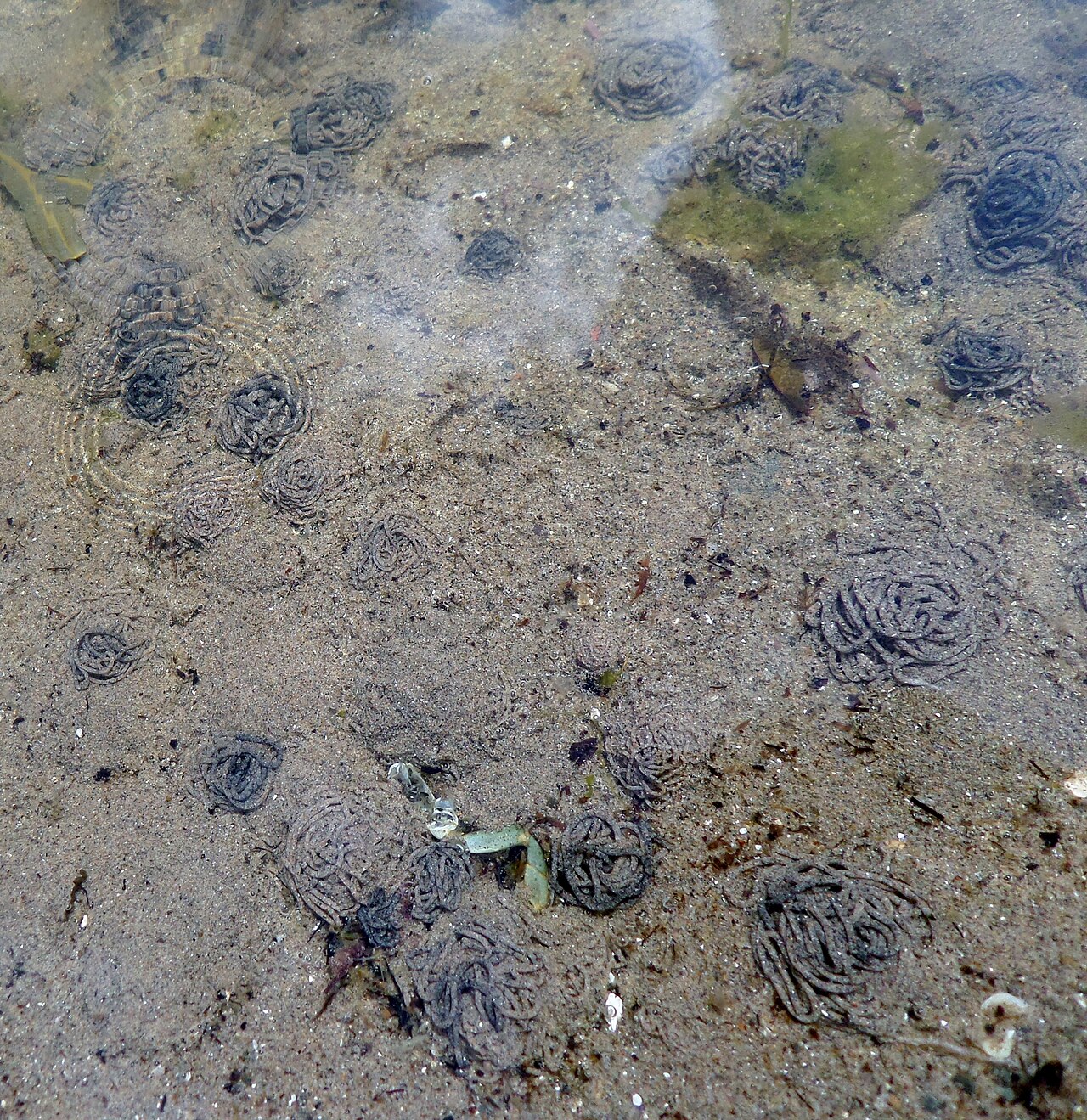
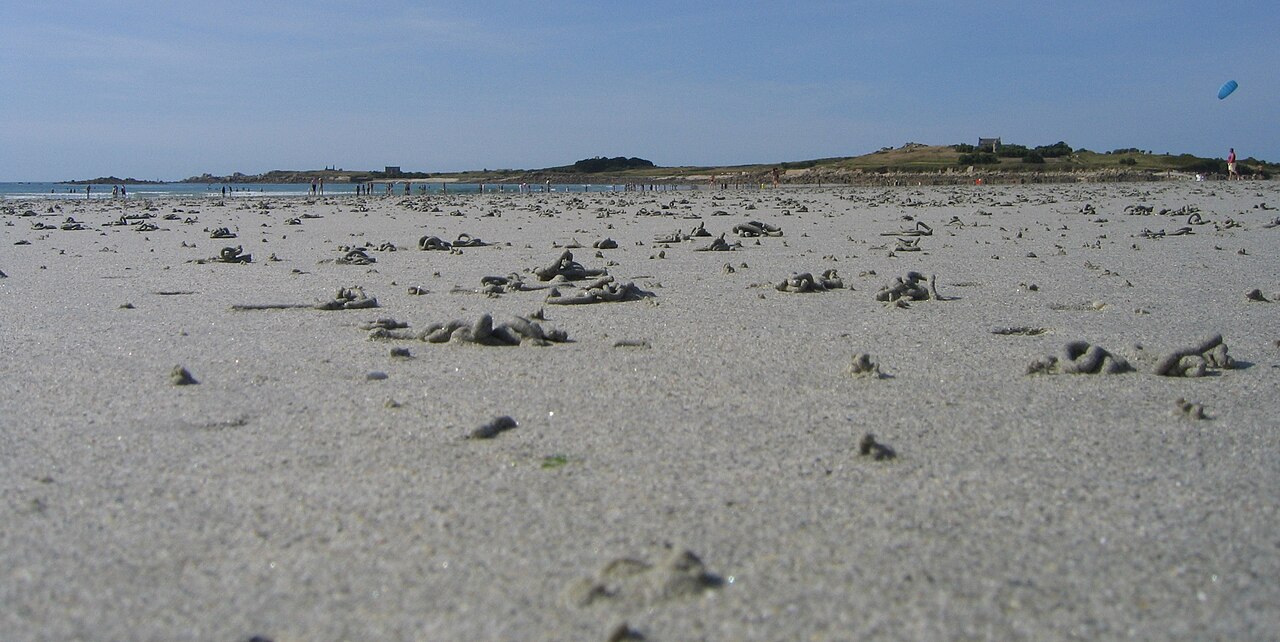
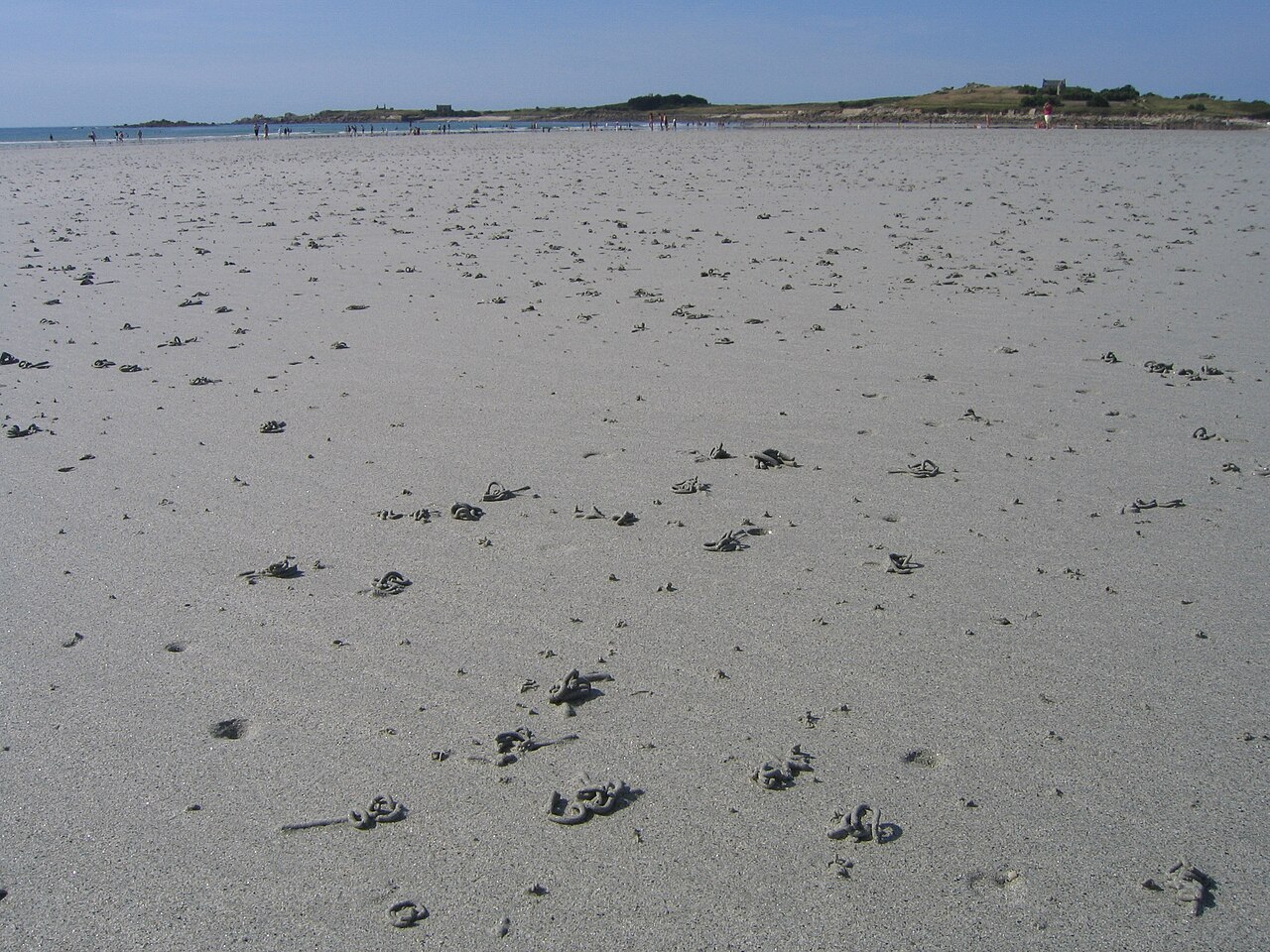
A lugworm lives in a U-shaped burrow in sand, consisting of an L-shaped gallery lined with mucus and a vertical unlined head shaft. At the surface, the head shaft is marked by a small saucer-shaped depression, while the tail shaft is marked by a highly coiled cast of sand. The worm lies with its head at the base of the head shaft, swallowing sand periodically, which causes the sand in the depression to sink. It softens sand by pushing its head up with a piston action and maintains a current of water driven through the burrow from the hind end by waves of contraction along its body. Once burrowed, a lugworm seldom leaves its burrow, staying for weeks, though it may leave to create a fresh burrow for breeding. For 2 days in early October, there is a mass breeding event where all lugworms liberate ova and sperms into the water for fertilization. The ova are enclosed in tongue-shaped masses of jelly about 8 inches long, 3 inches wide, and 1 inch thick, anchored at one end. Larvae hatch, feed on the jelly, and break out when they have grown to a dozen segments, then burrow into sand higher up the beach than adults, gradually moving down as they age.
Reader's Guide
Arenicola, or lugworms, are significant as a genus of burrowing annelids that shape sandy shore environments through their burrowing and feeding activities. Their U-shaped burrows aerate sediment and influence nutrient cycling. The mass breeding event in early October, where all individuals release gametes simultaneously, is a notable reproductive strategy that ensures fertilization in the water column. The species distribution—such as A. cristata in warm-water North American shores, A. caroledna in China and Japan, A. marina in Europe, and A. loveni in Southern Africa—highlights biogeographic patterns. In popular culture, a singing lugworm appears in William Butler Yeats's poem 'The Man Who Dreamed of Faeryland,' and the comic strip 'Ollie and Quentin' by Piers Baker features a lugworm named Quentin, inspired by Baker's use of lugworms as bait. The genus comprises eight recognized species, including A. bombayensis, A. brasiliensis, A. defodiens, and A. glasselli, each with specific taxonomic authorities. Their ecological role and cultural references underscore their legacy as both a biological subject and a symbol in literature and art.
Did You Know?
- Arenicola, also known as sandworms, includes lugworms and black lugs.
- Arenicola cristata is the dominant warm-water lugworm on the shores of North America and Humboldt Bay, California.
- For 2 days in early October, all lugworms liberate ova and sperms into the water for a mass breeding event.
- Cartoonist Piers Baker created a syndicated comic strip called Ollie and Quentin featuring a lugworm named Quentin.
Taxonomic Identity and Nomenclature
Arenicola cristata is a species of marine annelid worm that belongs to the family Arenicolidae, the taxonomic group encompassing the lugworms. Its common name, the American lugworm, reflects both its family-level classification and the North American coastal waters where it is most prominently encountered. As a member of the annelid class, it possesses the segmented body plan characteristic of that group, while its placement in Arenicolidae identifies it as part of a specialized lineage of marine worms adapted to a burrowing existence within coastal sediments. The specific epithet "cristata" sets this species apart from other members of the genus Arenicola, marking it as a distinct evolutionary branch within the family. The American lugworm therefore occupies a clearly defined position in marine taxonomy: a segmented worm, a member of the lugworm family, and a species whose common name anchors it to the Atlantic and Pacific shores of the United States. Its classification within Arenicolidae also connects it to a broader group of lugworm species distributed across marine environments on multiple continents.
Body Structure and Regional Anatomy
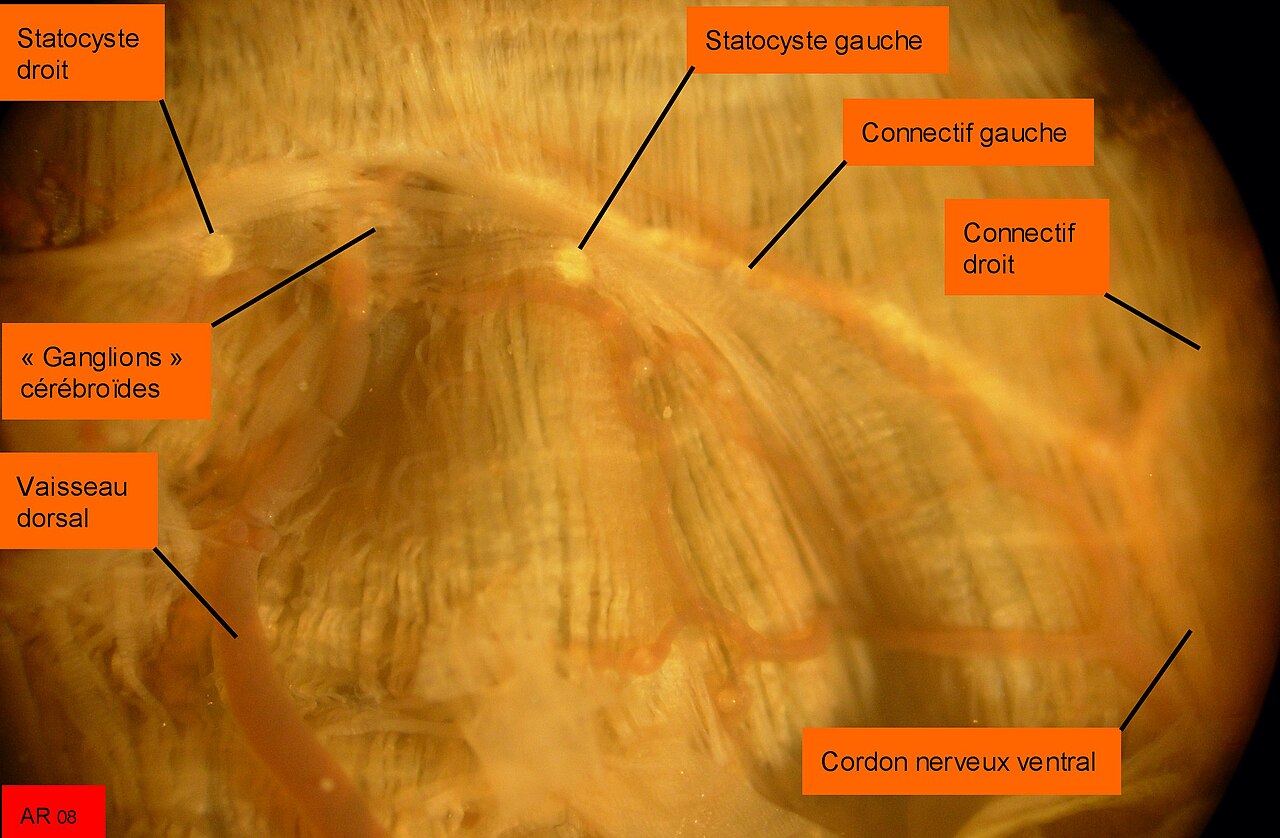
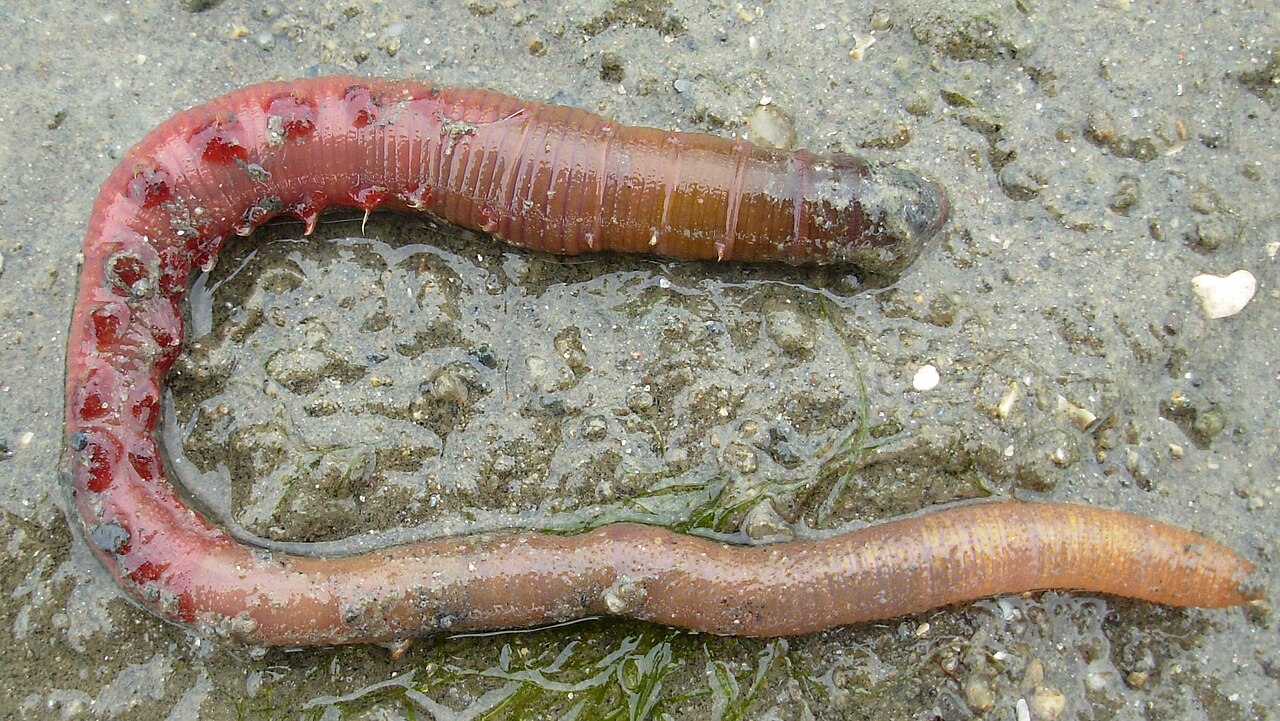
The American lugworm possesses a worm-like, or vermiform, body that is notably firm and sturdy in construction. In terms of overall dimensions, it can grow to a maximum length of approximately 30 centimeters, roughly 12 inches, while reaching a width of about 2.5 centimeters, or one inch. The body is thickest toward the anterior end and tapers progressively at both the head and the posterior tail. Coloration varies among individuals, with specimens appearing green, black, or red. The head region is notably bare, lacking any appendages or eyes, a feature consistent with a life spent buried in sediment. The mouth is equipped with a bulbous proboscis whose surface is studded with fingerlike projections. The body can be divided into three principal regions. The anterior section is the most robust and heavily muscled, bearing setae hooks along its surface. The middle region is distinguished by the presence of red or black branching branchiae, the worm's respiratory structures. The posterior section is the least developed of the three, indicating a comparatively reduced role relative to the other two zones.
Geographic Range Across Multiple Continents
The American lugworm enjoys a notably broad geographic distribution that spans both coasts of the United States as well as parts of Europe and Asia. Along the eastern seaboard, its range extends from Cape Cod in the north down through Florida and into the waters around Louisiana, covering a substantial stretch of the Atlantic and Gulf coasts. On the western side, the species is found along the entire Pacific coastline of the United States, from the northern reaches down to the southern tip. Beyond North America, populations of this lugworm have also been documented in Spain, placing it in European marine waters, and in China, extending its known range into East Asian coastal environments. This transcontinental presence, spanning the Americas, Europe, and Asia, indicates that the species is not confined to a single ocean basin but rather occupies suitable sandy and muddy habitats wherever the environmental conditions align. The breadth of its distribution, from Cape Cod to Florida and Louisiana, and across to the shores of Spain and China, underscores the adaptability of this annelid to a wide range of marine settings.
Burrowing Habitat and Sediment Preferences
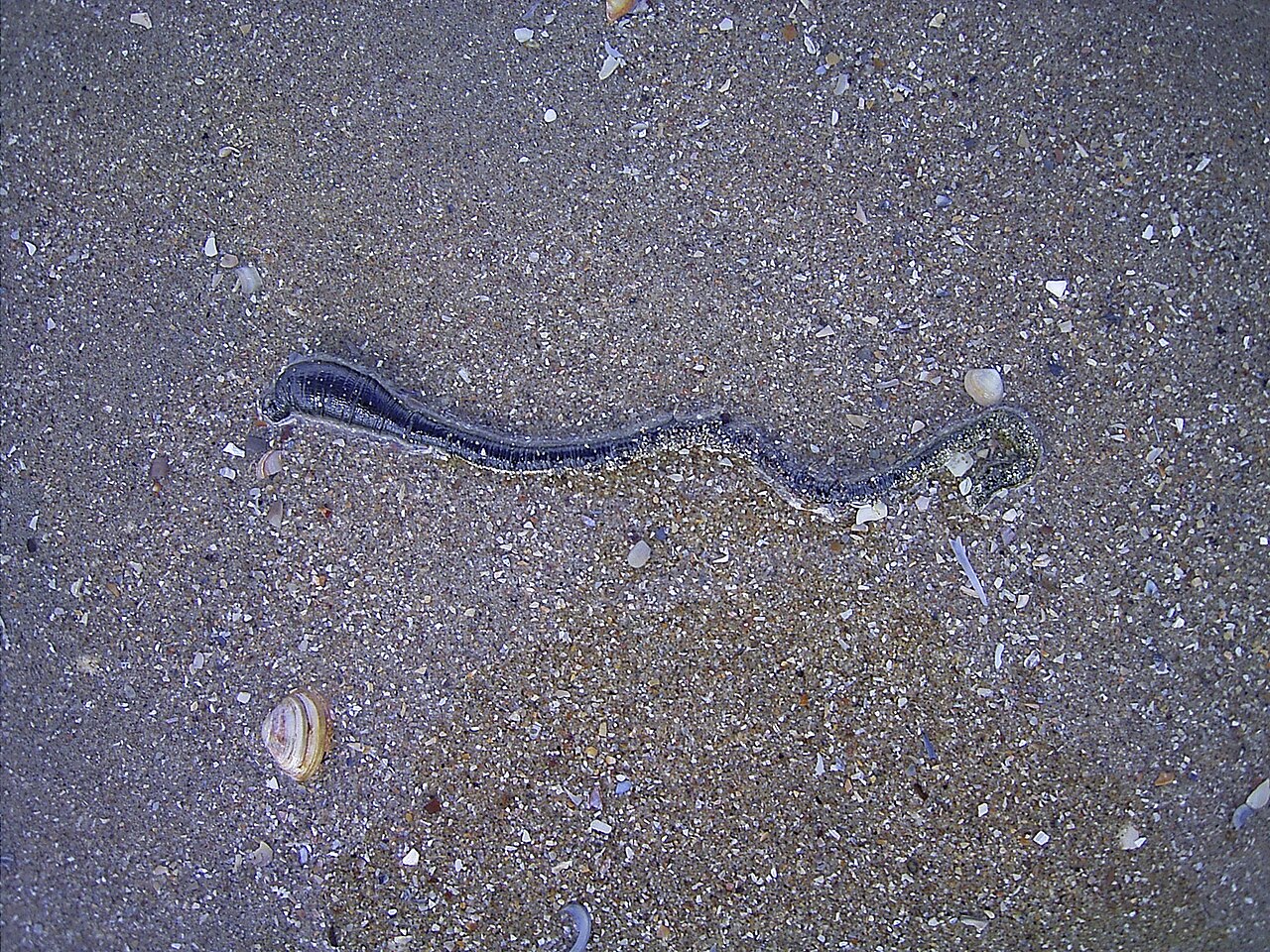
The American lugworm is a creature of the intertidal zone, spending its life buried within the soft substrates of coastal environments. It favors shallow sandy substrates and mudflats, typically in protected areas where wave action is moderated and the sediment remains stable enough to maintain a burrow. The precise location of its burrows is closely tied to the tidal cycle: they are generally situated near the low tide line or just below it, placing the worm in a zone that is periodically exposed during the ebb of the tide yet remains within the intertidal band where sediment conditions are favorable. This positioning near the low tide line suggests a preference for the lower intertidal zone, where the substrate is likely to be finer and more compacted, providing the structural integrity needed for a burrow that can reach up to 30 centimeters in length. The requirement for protected areas indicates that the species is not well suited to exposed, high-energy shorelines where constant wave disturbance would undermine its burrow. Instead, it thrives in the calmer, sheltered stretches of coast where sandy and muddy sediments accumulate and remain undisturbed, offering the stable environment necessary for its burrowing lifestyle.
Gallery
Frequently Asked Questions
What exactly is Arenicola?
Arenicola is a genus of burrowing marine worms in the capitellid family of annelids, encompassing what most people call lugworms and black lugs. It contains eight recognized species and is a fixture of sandy coastal environments worldwide.
What makes Arenicola's U-shaped burrows ecologically important?
Each worm excavates a characteristic U-shaped tunnel through the sediment, with one opening near the surface and the other reaching deeper. These burrows aerate the sand, trap organic matter, and drive nutrient cycling, effectively engineering the habitat for countless other coastal organisms.
Where do the different Arenicola species occur?
Arenicola marina is the classic European form, stretching up into Norwegian waters, while A. cristata dominates warm sandy shores along the North American coast. A. loveni is the most geographically limited, restricted to Southern African waters.
What is a mass breeding event in Arenicola?
When seasonal cues line up, enormous numbers of adults release their gametes into the water column at roughly the same moment, producing a synchronized spawning pulse. This strategy sharply increases the odds of successful fertilization in the open marine environment.
Why do both anglers and marine ecologists care about Arenicola?
Their size, sheer abundance, and ease of collection from sandy beaches make them one of the most popular live baits for shore fishing. Ecologists, meanwhile, track their populations as indicator organisms because lugworm health closely mirrors the condition of coastal sediment systems.
More in Marine Invertebrates 1-24
Elsewhere in the Marine Invertebrates universe
Spotted an error? Know more?
This is a living reference — every entry is fact-audited, and reader corrections feed straight into our audit queue. Suggest an edit · See this site's audit record