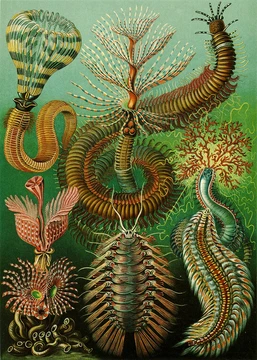
Tunicate
Marine chordates with a tunic and tadpole-like larvae.
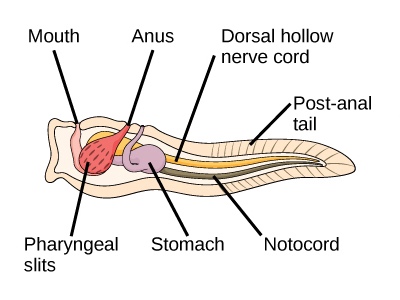
Tunicates are marine invertebrates belonging to the subphylum Tunicata, part of the phylum Chordata, which also includes vertebrates. Despite their simple adult appearance, their close relationship to vertebrates is certain because during their mobile larval stage they possess a notochord, hollow dorsal nerve cord, pharyngeal slits, post-anal tail, and endostyle, resembling a tadpole. They are the only chordates that have lost myomeric segmentation, except possibly in the seriation of gill slits, though doliolids still display segmentation of muscle bands.
- subphylum
- Tunicata
- number_of_species
- about 3,000
- habitat
- marine, mostly shallow water
- key_feature
- tunic (exoskeleton of proteins and carbohydrates)
- larval_stage
- mobile, tadpole-like, with chordate features
- adult_form
- sessile or pelagic filter feeders with siphons
Lore & Background
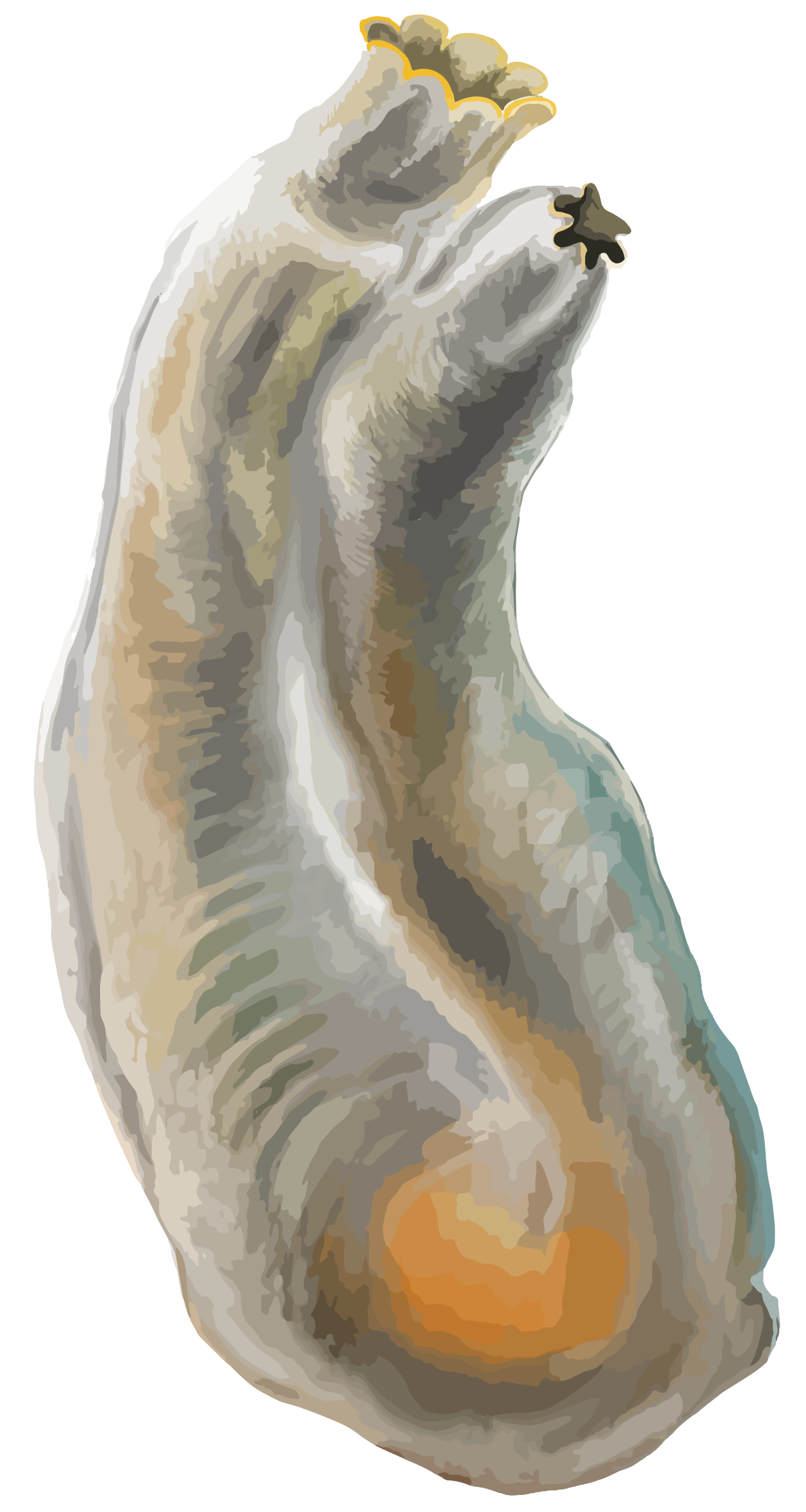
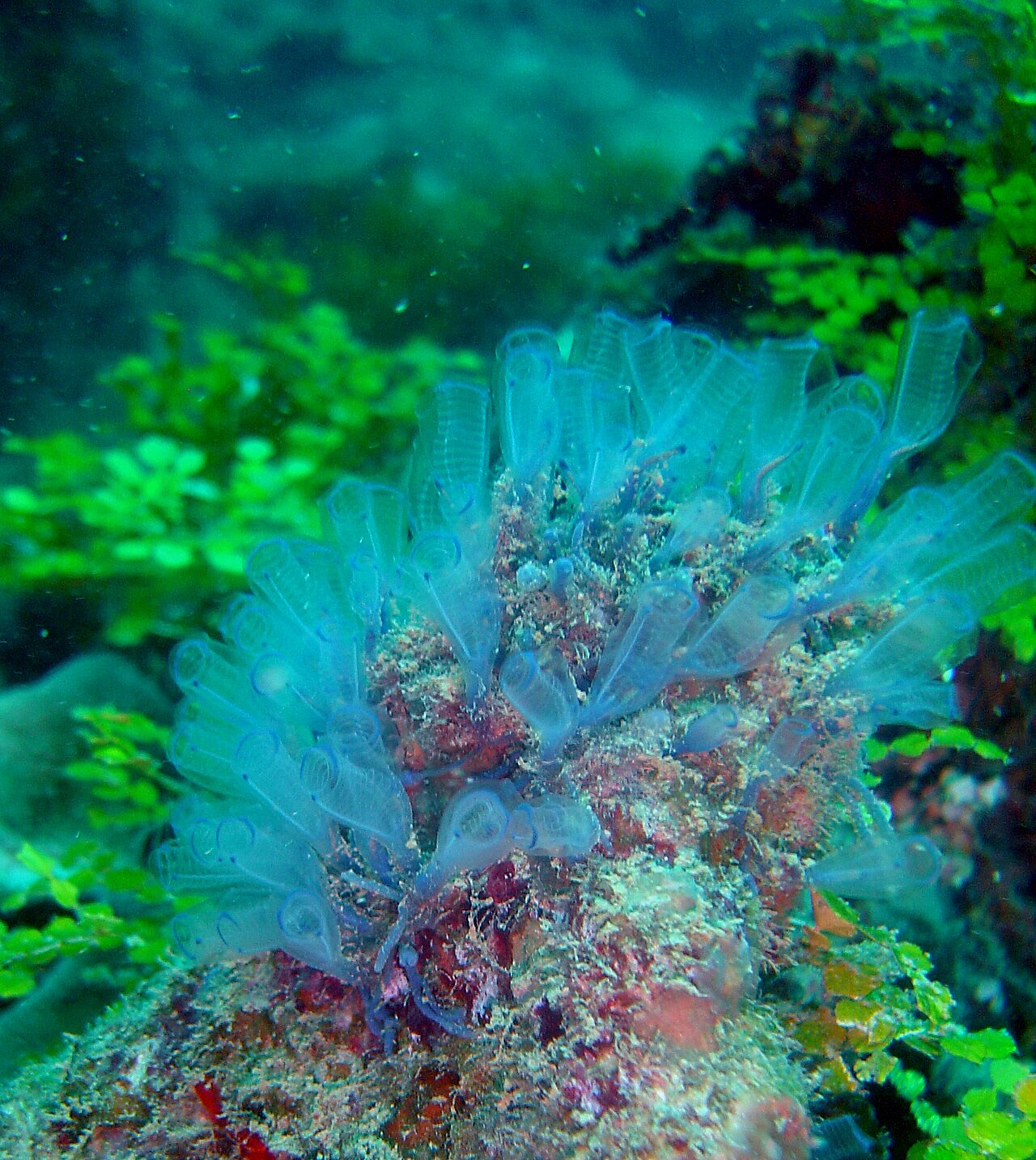
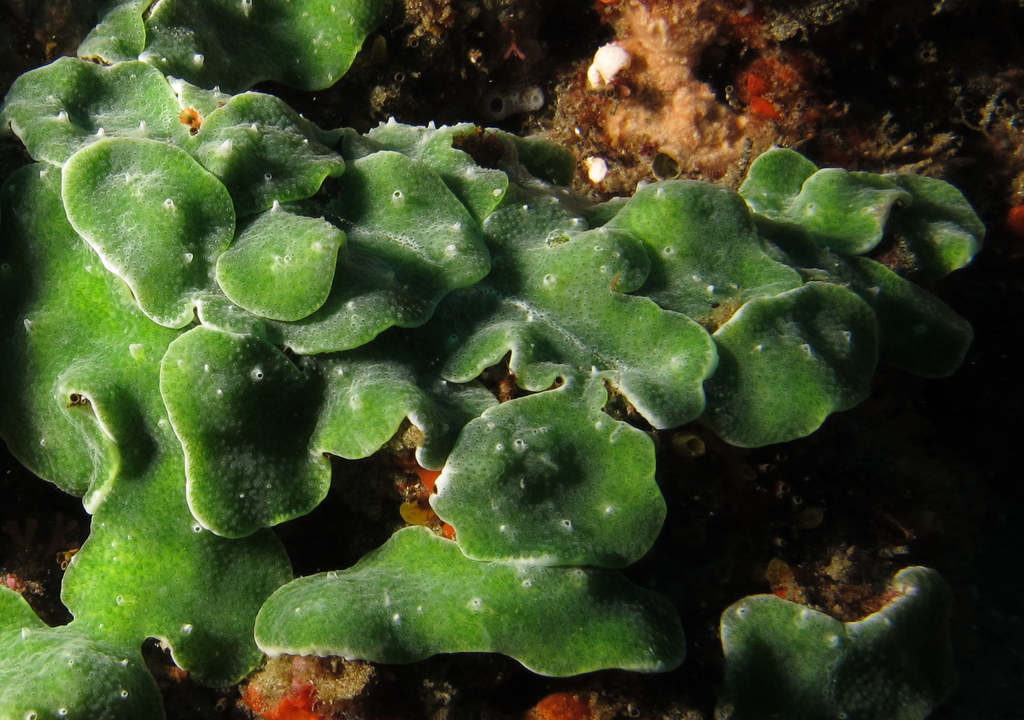
Tunicates are marine invertebrates that belong to the subphylum Tunicata, a group within the phylum Chordata. Despite their simple adult form, their close relationship to vertebrates is evident during their mobile larval stage, when they possess a notochord, a hollow dorsal nerve cord, pharyngeal slits, a post-anal tail, and an endostyle, resembling a tadpole. As adults, they are the only chordates to have lost myomeric segmentation, though doliolids retain segmented muscle bands. Their defining characteristic is a "tunic," an exoskeleton formed from proteins and carbohydrates. This covering can be thin, translucent, and gelatinous in some species, or thick, tough, and stiff in others. The name Tunicata, coined in 1760, means "clothed with a tunic." Tunicates are marine filter feeders with a water-filled, sac-like body and two siphons: an incurrent siphon for drawing in water and an excurrent siphon for expelling it. Some live as solitary individuals, while others form colonies through budding, with each unit called a zooid. Adult ascidians are sessile, permanently attached to rocks, shells, coral, seaweed, or ship hulls, while thaliaceans and larvaceans swim in the pelagic zone. They appear in a range of solid or translucent colors and may resemble seeds, grapes, peaches, barrels, or bottles. One of the largest, the stalked sea tulip *Pyura pachydermatina*, can grow over one meter tall. Common names include sea squirts, named for their habit of contracting and squirting water when disturbed, and sea liver or sea pork, due to the appearance of their dead colonies.
Reader's Guide
Tunicates are significant as the closest invertebrate relatives of vertebrates, providing insight into the evolution of chordates. Their larval stage exhibits all key chordate features, while adults often lose these traits, making them a model for studying developmental and evolutionary transitions. The subphylum includes about 3,000 species, with ascidians being the most numerous. Tunicates are the only chordates that have lost myomeric segmentation, though doliolids retain muscle band segmentation. Their tunic, containing cellulose (tunicin), is unique among invertebrate exoskeletons in that it grows with the animal. Tunicates are also notable for their colonial forms, where zooids can integrate into complex structures, and for their filter-feeding lifestyle using siphons.
Did You Know?
- Tunicates are the only chordates that have lost myomeric segmentation, except possibly in the seriation of gill slits.
- The tunic of tunicates is unique among invertebrate exoskeletons because it can grow as the animal enlarges and does not need to be shed.
- Some tunicates, such as sea squirts, are named for their habit of contracting their bodies sharply and squirting out water when disturbed.
Gallery


More in Marine Invertebrates 1-24
Spotted an error? Know more?
This is a living reference — every entry is fact-audited, and reader corrections feed straight into our audit queue. Suggest an edit · See this site's audit record